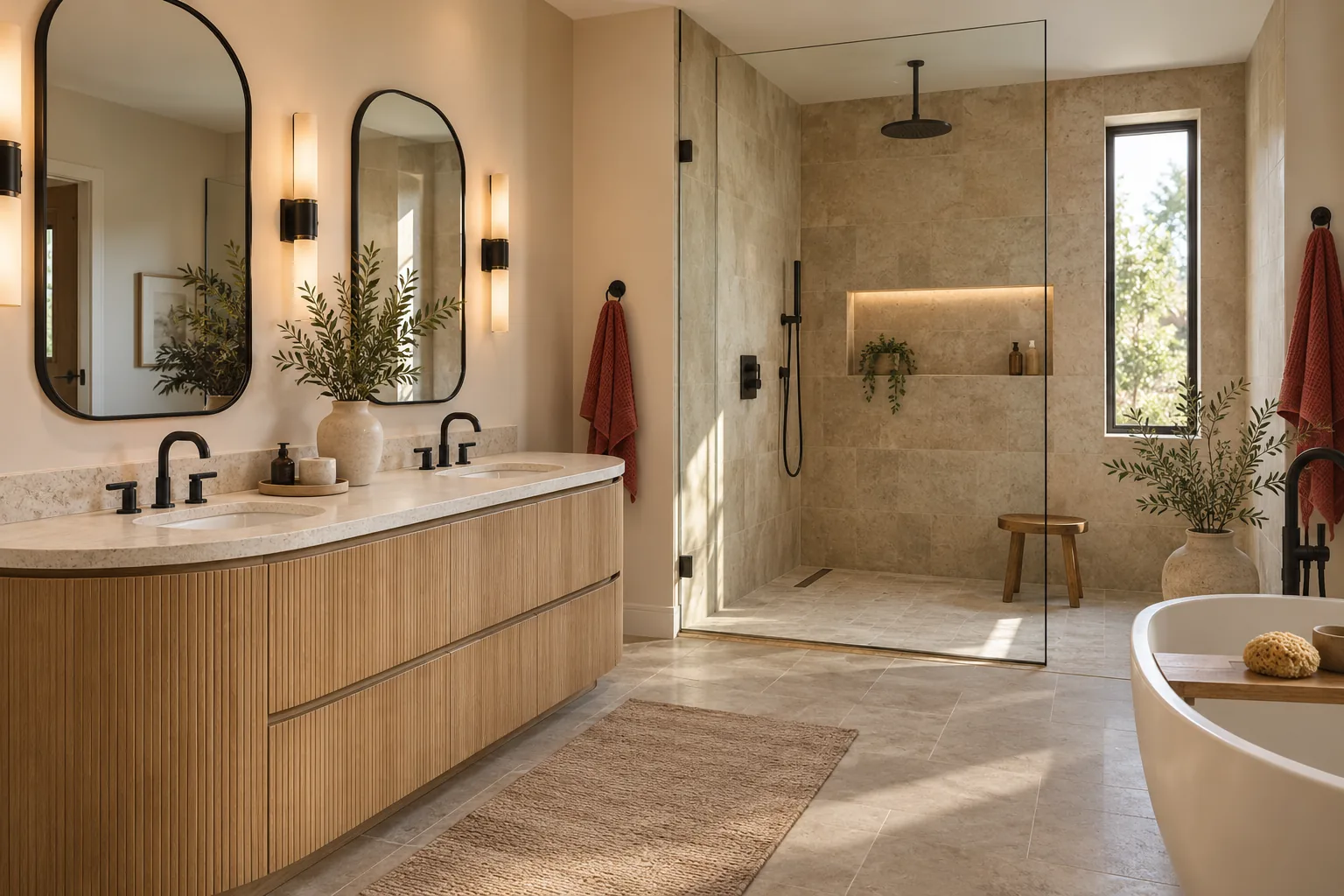
Before selecting a vanity, take a closer look at what you use every day. A storage conversation becomes more useful when it is based on real objects and routines rather than a general wish for more space.
Group what belongs together
Separate daily essentials, occasional items, cleaning supplies and spare towels. Notice which things need to be easy to reach and which can live elsewhere. Your bathroom may be storing objects that do not need to occupy its most useful space.
Follow the morning routine
Walk through getting ready from start to finish. Where do you put a towel, a toothbrush, glasses or clothes? If several people share the room, ask each person where the routine becomes frustrating. Use those observations to begin your design discussion.
Discuss the details
Drawers, shelves and doors organize objects differently. Bring a list of the items you want to store and ask how each proposed arrangement would accommodate them. Do not assume a beautiful reference photo offers the same storage as the room you need.
Keep care in mind
Consider how you prefer to tidy and clean. Open shelves put items on display; closed storage keeps them out of sight. Neither is automatically right for every household. Ask about the care instructions for the actual products being considered.
Leave room for questions
Your project team should review the existing room and the proposed scope before final decisions. Describe your goals and ask which measurements or other information are needed. Keep a short record of agreed priorities so that finish selections do not distract from the original purpose.
The best starting point is not a perfect mood board. It is a clear account of how your bathroom can support everyday life.